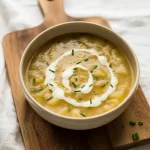
I made ricotta so impossibly silky and fresh that store-bought tubs will feel like an afterthought.

I am obsessed with homemade ricotta because it tastes honest and unpretentious, like dairy stripped down to its best self. I love how a simple bowl of fresh ricotta makes bread, pasta, or fruit sing without trying too hard.
But what really gets me is the texture; airy, slightly grainy, and utterly pillowy at once. I crave that clean milky flavor cut by a flake of kosher salt, nothing else needed.
And the smell when you open the jar. Pure dairy joy.
I eat it with a spoon, no apologies. I hoard leftovers in the fridge and steal spoonfuls nightly.
Ingredients

- Whole milk gives creamy body and protein, it’s comforting and slightly milky.
- Plus heavy cream makes it decadently rich and ultra-silky, like brunch-level indulgence.
- Acid from vinegar or lemon wakes it up, helps curds form, brightens the taste.
- Basically salt brings balance, sharpens flavor, and it’s more savory and real.
- Plus sugar adds a gentle sweet note, perfect for desserts or fruit pairings.
Ingredient Quantities
- 4 cups whole milk
- 1 cup heavy cream (optional for richer, creamier ricotta)
- 3 tablespoons white vinegar or fresh lemon juice
- 1/2 teaspoon kosher salt plus more to taste
- Optional: 1 tablespoon granulated sugar if you want a slightly sweet ricotta
How to Make this
1. Pour 4 cups whole milk and 1 cup heavy cream (if using) into a medium saucepan, stir in 1/2 teaspoon kosher salt and the optional 1 tablespoon sugar if you want it a little sweet.
2. Heat the milk mixture over medium heat, stirring occasionally so it does not scorch, until it reaches about 190 F to 200 F or just below a simmer; you should see steam and tiny bubbles at the edge, not a rolling boil.
3. Remove the pan from heat and slowly stir in 3 tablespoons white vinegar or fresh lemon juice, about a tablespoon at a time, then let it sit undisturbed for 5 to 10 minutes while curds form and the whey separates.
4. Once curds have formed and the whey looks translucent and slightly yellow, use a slotted spoon or spatula to gently check texture; if it still looks milky, add another teaspoon of vinegar or lemon and wait a couple minutes.
5. Line a colander with a double layer of cheesecloth, a clean thin kitchen towel, or coffee filters and set it over a bowl to catch the whey.
6. Carefully ladle or pour the curds and whey into the lined colander, let drain for 10 to 30 minutes depending on how wet or dry you want your ricotta; shorter drain gives creamier ricotta, longer drain gives firmer cheese.
7. For a smoother, shinier ricotta you can gently stir the curds in the bowl before transferring to a container; taste and add more kosher salt to your liking.
8. Transfer ricotta to an airtight container and refrigerate; it keeps 3 to 4 days but is best eaten within 48 hours for freshness.
9. Save the whey for soups, smoothies or bread baking if you like, and if you want even richer ricotta next time try using more cream or drain it less for a softer texture.
Equipment Needed
1. Medium saucepan (4 to 6 quart)
2. Instant-read or candy thermometer
3. Wooden spoon or heatproof spatula
4. Slotted spoon or large spoon
5. Ladle or large measuring cup for pouring
6. Colander
7. Double layer of cheesecloth or a clean thin kitchen towel (or coffee filters)
8. Large bowl to catch whey
9. Measuring cups and measuring spoons
10. Airtight container for storing the ricotta
FAQ
How To Make Homemade Ricotta Cheese Recipe Substitutions and Variations
How To Make Homemade Ricotta Cheese
Ingredients
- 4 cups whole milk
- 1 cup heavy cream (optional for richer, creamier ricotta)
- 3 tablespoons white vinegar or fresh lemon juice
- 1/2 teaspoon kosher salt plus more to taste
- Optional: 1 tablespoon granulated sugar if you want a slightly sweet ricotta
Method
1. Pour the milk and cream into a large heavy pot. Heat over medium until it reaches about 190°F, when small bubbles form around the edge and steam rises. Don’t let it boil, just almost there.
2. Remove from heat and stir in the vinegar or lemon juice and the salt. Wait 1 to 2 minutes, you’ll see curds separate from the whey. If it’s slow, add a little more acid, a teaspoon at a time.
3. Let sit undisturbed for 10 minutes so curds fully form.
4. Line a fine mesh strainer with cheesecloth or a clean thin kitchen towel and set over a bowl. Ladle the curds into the strainer and let drain for 15 to 30 minutes depending on how wet or dry you want it. For creamier ricotta, drain less time.
5. Transfer ricotta to a bowl and taste, add more salt or sugar if using. Use right away or refrigerate up to 4 days.
Quick tips
– Save the leftover whey for soups, smoothies or bread baking, it’s full of flavor.
– If you want ultra silky ricotta, fold gently with a spoon rather than mixing fast.
– Warm milk gives better curds than cold milk straight from the fridge.
Substitutions
- Whole milk: you can use 2% milk, but expect less rich, slightly grainier curds
- Heavy cream: substitute with an equal amount of whole milk for lower fat, or use plain yogurt thinned with a bit of milk for creaminess
- White vinegar/lemon juice: use apple cider vinegar or a mix of half vinegar and half lemon for a milder tang
- Kosher salt: use table salt but use about half the amount, then adjust to taste
Pro Tips
1. Warm the milk slowly and stir often so it wont scorch on the bottom; scorched milk gives a bitter taste and a grainy texture no matter how carefully you drain it.
2. If your curds are weak, add the acid teaspoon by teaspoon and give it a few extra minutes; patience often fixes it better than more vinegar or lemon all at once.
3. Drain time controls texture big time — 10 minutes for creamy spreadable ricotta, 20 to 30 minutes for firmer scoopable curds. Don’t rush it but check early so you dont over-dry it.
4. Save the whey and use it in place of water or milk for soups, smoothies or bread dough; it adds flavor and reduces waste, plus that leftover liquid helps your next bake a little better.

How To Make Homemade Ricotta Cheese Recipe
I made ricotta so impossibly silky and fresh that store-bought tubs will feel like an afterthought.
8
servings
176
kcal
Equipment: 1. Medium saucepan (4 to 6 quart)
2. Instant-read or candy thermometer
3. Wooden spoon or heatproof spatula
4. Slotted spoon or large spoon
5. Ladle or large measuring cup for pouring
6. Colander
7. Double layer of cheesecloth or a clean thin kitchen towel (or coffee filters)
8. Large bowl to catch whey
9. Measuring cups and measuring spoons
10. Airtight container for storing the ricotta
Ingredients
-
4 cups whole milk
-
1 cup heavy cream (optional for richer, creamier ricotta)
-
3 tablespoons white vinegar or fresh lemon juice
-
1/2 teaspoon kosher salt plus more to taste
-
Optional: 1 tablespoon granulated sugar if you want a slightly sweet ricotta
Directions
- Pour 4 cups whole milk and 1 cup heavy cream (if using) into a medium saucepan, stir in 1/2 teaspoon kosher salt and the optional 1 tablespoon sugar if you want it a little sweet.
- Heat the milk mixture over medium heat, stirring occasionally so it does not scorch, until it reaches about 190 F to 200 F or just below a simmer; you should see steam and tiny bubbles at the edge, not a rolling boil.
- Remove the pan from heat and slowly stir in 3 tablespoons white vinegar or fresh lemon juice, about a tablespoon at a time, then let it sit undisturbed for 5 to 10 minutes while curds form and the whey separates.
- Once curds have formed and the whey looks translucent and slightly yellow, use a slotted spoon or spatula to gently check texture; if it still looks milky, add another teaspoon of vinegar or lemon and wait a couple minutes.
- Line a colander with a double layer of cheesecloth, a clean thin kitchen towel, or coffee filters and set it over a bowl to catch the whey.
- Carefully ladle or pour the curds and whey into the lined colander, let drain for 10 to 30 minutes depending on how wet or dry you want your ricotta; shorter drain gives creamier ricotta, longer drain gives firmer cheese.
- For a smoother, shinier ricotta you can gently stir the curds in the bowl before transferring to a container; taste and add more kosher salt to your liking.
- Transfer ricotta to an airtight container and refrigerate; it keeps 3 to 4 days but is best eaten within 48 hours for freshness.
- Save the whey for soups, smoothies or bread baking if you like, and if you want even richer ricotta next time try using more cream or drain it less for a softer texture.
Notes
- Below you’ll find my best estimate of this recipe’s nutrition facts. Treat the numbers as a guide rather than a rule—great food should nourish both body and spirit. Figures are approximate, and the website owner assumes no liability for any inaccuracies in this recipe.
Nutrition Facts
- Serving Size: 60g
- Total number of serves: 8
- Calories: 176kcal
- Fat: 15g
- Saturated Fat: 9.1g
- Trans Fat: 0.5g
- Polyunsaturated: 0.25g
- Monounsaturated: 3.75g
- Cholesterol: 49mg
- Sodium: 130mg
- Potassium: 172mg
- Carbohydrates: 6.8g
- Fiber: 0g
- Sugar: 6.8g
- Protein: 4.6g
- Vitamin A: 360IU
- Vitamin C: 0mg
- Calcium: 148mg
- Iron: 0.1mg