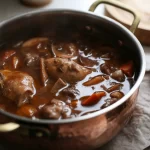
I can’t resist a Christmas duck with glossy orange sauce, crisp skin, and juicy meat that looks straight out of a holiday centerpiece. This is the kind of oven-roasted main dish that makes everyone pause before reaching for seconds.

I’m obsessed with roast duck for Christmas dinner because it feels dramatic without acting fussy. The skin gets glossy and crackly, the meat stays rich and ridiculously juicy, and that orange sauce?
Sharp, sweet, sticky, and bold enough to cut through every buttery bite. I love how a whole duck turns the table into a little event before anyone even grabs a fork.
But the best part is the flavor: deep, savory duck with fresh orange juice bringing that bright citrus punch. And yes, I absolutely go back for the crispy bits.
Always. No polite nibbling here.
Just holiday appetite.
Ingredients

- Whole duck is rich, juicy, and feels fancy without trying too hard.
- Kosher salt helps the skin crisp up and keeps everything tasting bright.
- Black pepper adds a little bite so the duck doesn’t feel flat.
- Orange zest and juice bring that fresh, sunny flavor duck seriously loves.
- Orange marmalade makes the glaze sticky, glossy, and just sweet enough.
- Honey and brown sugar give the skin that caramelized, craveable finish.
- Soy sauce adds salty depth, so it’s not just sweet on sweet.
- Vinegar cuts the richness and keeps each bite from feeling heavy.
- Garlic and ginger make the sauce warm, sharp, and way more interesting.
- Chicken stock turns the glaze into a real sauce you’ll want to spoon.
- Butter smooths everything out and gives the sauce a silky finish.
- Thyme and bay leaves add cozy, herby background flavor.
Basically, they’re quiet helpers.
- Plus, orange slices and parsley make it look fresh, not fussy.
Ingredient Quantities
- 1 whole duck, about 5 to 6 pounds, giblets removed
- 2 teaspoons kosher salt
- 1 teaspoon freshly ground black pepper
- 1 orange, zested and juiced
- 2 cups fresh orange juice (about 4 to 5 oranges)
- 1/2 cup orange marmalade
- 1/4 cup honey
- 2 tablespoons brown sugar, packed
- 2 tablespoons soy sauce
- 2 tablespoons red wine vinegar or sherry vinegar
- 3 cloves garlic, minced
- 1 tablespoon fresh ginger, grated
- 1 cup low sodium chicken stock
- 2 teaspoons cornstarch plus 2 tablespoons cold water for slurry
- 2 tablespoons unsalted butter
- 1 teaspoon dried thyme or 1 tablespoon fresh thyme leaves
- 2 bay leaves
- Optional: 2 tablespoons Grand Marnier or Cointreau for depth
- Orange slices and fresh parsley for garnish, optional
How to Make this
1. Preheat oven to 425°F (220°C). Pat the duck dry inside and out with paper towels, then score the skin in a crosshatch pattern being careful not to cut into the meat. Sprinkle 2 teaspoons kosher salt and 1 teaspoon freshly ground black pepper inside cavity and over the skin.
2. Stuff the cavity with orange zest, half the orange juice, 1 teaspoon dried thyme or 1 tablespoon fresh thyme leaves, and 2 bay leaves. Truss the duck legs or tuck them under the body and place the duck breast side up on a rack set in a roasting pan.
3. Roast the duck at 425°F for 20 minutes to help the skin start to render, then lower oven temperature to 350°F (175°C). Pierce the skin over the fatty areas with a fork or small knife if needed to help fat escape during cooking.
4. Every 20 minutes, carefully drain accumulated fat from the roasting pan into a heatproof container for later use or disposal. Continue roasting until an instant read thermometer inserted into the thickest part of the thigh reaches 165°F to 170°F, about 1 to 1 1/4 hours total depending on size.
5. While the duck roasts, make the orange sauce. In a medium saucepan combine 2 cups fresh orange juice, 1/2 cup orange marmalade, 1/4 cup honey, 2 tablespoons brown sugar, 2 tablespoons soy sauce, 2 tablespoons red wine vinegar or sherry vinegar, 3 cloves garlic minced, and 1 tablespoon fresh ginger grated. Add optional 2 tablespoons Grand Marnier or Cointreau if using and bring to a simmer.
6. Add 1 cup low sodium chicken stock, 2 teaspoons cornstarch mixed with 2 tablespoons cold water to make a slurry, and simmer the sauce until it thickens slightly, about 3 to 5 minutes. Stir in 2 tablespoons unsalted butter off heat for sheen and adjust seasoning. Keep warm.
7. In the last 15 minutes of roasting, brush the duck all over with the orange sauce, returning to the oven to glaze. Repeat once more in the final 5 minutes to build a glossy finish and deepen flavor.
8. Remove the duck from the oven and let it rest for 15 minutes on the carving board to allow juices to redistribute. Tent loosely with foil if desired.
9. Carve the duck, spoon additional warmed orange sauce over the slices, and garnish with orange slices and fresh parsley if desired. Serve remaining sauce on the side.
Equipment Needed
1. Roasting pan with a roasting rack
2. Instant read meat thermometer
3. Sharp chef knife and kitchen shears
4. Carving board
5. Medium saucepan
6. Whisk and silicone basting brush
7. Measuring cups and spoons
8. Heatproof container for draining fat and a bowl for the glaze slurry
FAQ
How To Cook Duck Recipe Substitutions and Variations
- Orange marmalade: substitute apricot jam or marmalade made with grapefruit for similar sweetness and texture
- Soy sauce: substitute tamari for gluten free option or coconut aminos for a milder, slightly sweeter flavor
- Low sodium chicken stock: substitute duck or turkey stock for richer flavor, or vegetable stock for a lighter, vegetarian-friendly option
- 2 teaspoons cornstarch plus cold water slurry: substitute 2 teaspoons arrowroot mixed with cold water for a clear glossy finish or use a 1 tablespoon all purpose flour roux for a sturdier, less glossy sauce
Pro Tips
– Dry the skin thoroughly and score shallowly, then salt well. Moisture is the enemy of crackling skin, so pat the duck very dry and leave it uncovered in the fridge for an hour or two if you have time to further dry the surface.
– Collect and reserve the rendered fat as you drain it. Duck fat is gold for roasting potatoes or sautéing greens, and skimming it during the roast keeps the bird from sitting in its own fat so the skin crisps better.
– Use an instant read thermometer and trust it. Aim for 165 to 170°F in the thigh; remove the duck a few degrees earlier if you prefer a slightly pinker result, since carryover will continue to cook the meat while it rests.
– Build the glaze in thin layers near the end of roasting. Brushing a couple of times during the final 15 minutes gives a glossy, sticky finish without burning the sugars. If the sauce seems too thin, reduce it down separately so you can control thickness before glazing.
– Brighten the sauce at the end with a splash of acid or liqueur, or a pinch of salt to lift flavors. If it gets too sweet from marmalade and honey, add a touch more vinegar, a squeeze of fresh orange juice, or the optional orange liqueur to balance it.

How To Cook Duck Recipe
I can’t resist a Christmas duck with glossy orange sauce, crisp skin, and juicy meat that looks straight out of a holiday centerpiece. This is the kind of oven-roasted main dish that makes everyone pause before reaching for seconds.
6
servings
950
kcal
Equipment: 1. Roasting pan with a roasting rack
2. Instant read meat thermometer
3. Sharp chef knife and kitchen shears
4. Carving board
5. Medium saucepan
6. Whisk and silicone basting brush
7. Measuring cups and spoons
8. Heatproof container for draining fat and a bowl for the glaze slurry
Ingredients
-
1 whole duck, about 5 to 6 pounds, giblets removed
-
2 teaspoons kosher salt
-
1 teaspoon freshly ground black pepper
-
1 orange, zested and juiced
-
2 cups fresh orange juice (about 4 to 5 oranges)
-
1/2 cup orange marmalade
-
1/4 cup honey
-
2 tablespoons brown sugar, packed
-
2 tablespoons soy sauce
-
2 tablespoons red wine vinegar or sherry vinegar
-
3 cloves garlic, minced
-
1 tablespoon fresh ginger, grated
-
1 cup low sodium chicken stock
-
2 teaspoons cornstarch plus 2 tablespoons cold water for slurry
-
2 tablespoons unsalted butter
-
1 teaspoon dried thyme or 1 tablespoon fresh thyme leaves
-
2 bay leaves
-
Optional: 2 tablespoons Grand Marnier or Cointreau for depth
-
Orange slices and fresh parsley for garnish, optional
Directions
- Preheat oven to 425°F (220°C). Pat the duck dry inside and out with paper towels, then score the skin in a crosshatch pattern being careful not to cut into the meat. Sprinkle 2 teaspoons kosher salt and 1 teaspoon freshly ground black pepper inside cavity and over the skin.
- Stuff the cavity with orange zest, half the orange juice, 1 teaspoon dried thyme or 1 tablespoon fresh thyme leaves, and 2 bay leaves. Truss the duck legs or tuck them under the body and place the duck breast side up on a rack set in a roasting pan.
- Roast the duck at 425°F for 20 minutes to help the skin start to render, then lower oven temperature to 350°F (175°C). Pierce the skin over the fatty areas with a fork or small knife if needed to help fat escape during cooking.
- Every 20 minutes, carefully drain accumulated fat from the roasting pan into a heatproof container for later use or disposal. Continue roasting until an instant read thermometer inserted into the thickest part of the thigh reaches 165°F to 170°F, about 1 to 1 1/4 hours total depending on size.
- While the duck roasts, make the orange sauce. In a medium saucepan combine 2 cups fresh orange juice, 1/2 cup orange marmalade, 1/4 cup honey, 2 tablespoons brown sugar, 2 tablespoons soy sauce, 2 tablespoons red wine vinegar or sherry vinegar, 3 cloves garlic minced, and 1 tablespoon fresh ginger grated. Add optional 2 tablespoons Grand Marnier or Cointreau if using and bring to a simmer.
- Add 1 cup low sodium chicken stock, 2 teaspoons cornstarch mixed with 2 tablespoons cold water to make a slurry, and simmer the sauce until it thickens slightly, about 3 to 5 minutes. Stir in 2 tablespoons unsalted butter off heat for sheen and adjust seasoning. Keep warm.
- In the last 15 minutes of roasting, brush the duck all over with the orange sauce, returning to the oven to glaze. Repeat once more in the final 5 minutes to build a glossy finish and deepen flavor.
- Remove the duck from the oven and let it rest for 15 minutes on the carving board to allow juices to redistribute. Tent loosely with foil if desired.
- Carve the duck, spoon additional warmed orange sauce over the slices, and garnish with orange slices and fresh parsley if desired. Serve remaining sauce on the side.
Notes
- Below you’ll find my best estimate of this recipe’s nutrition facts. Treat the numbers as a guide rather than a rule—great food should nourish both body and spirit. Figures are approximate, and the website owner assumes no liability for any inaccuracies in this recipe.
Nutrition Facts
- Serving Size: 415g
- Total number of serves: 6
- Calories: 950kcal
- Fat: 80g
- Saturated Fat: 25g
- Trans Fat: 0.5g
- Polyunsaturated: 12g
- Monounsaturated: 38g
- Cholesterol: 220mg
- Sodium: 900mg
- Potassium: 700mg
- Carbohydrates: 40g
- Fiber: 3g
- Sugar: 34g
- Protein: 65g
- Vitamin A: 900IU
- Vitamin C: 20mg
- Calcium: 80mg
- Iron: 4mg