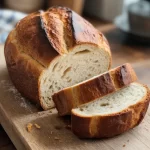
I just made Soft Fluffy French Bread that stays pillowy, slices like a dream, and makes plain buttered toast feel like a statement.

I’m obsessed with this Soft Fluffy French Bread because it actually tastes like proper bread, not air pretending to be bread. I love the pillowy crumb that makes you tear into a slice and grin.
It’s like the best Fluffy French Bread I keep dreaming about. The smell of yeast and that brush of unsalted butter, melted on top?
Dangerous. I adore how it makes dinner feel worth leaving the phone.
But simple. No pretension.
Just bread that demands butter, soup, or raw enthusiasm. I want it every week.
No fuss, just crumbs, honestly. I eat slices like a maniac.
Ingredients

- Flour gives structure and chew.
Basically holds everything together while you shape it.
- Warm water wakes the yeast.
Plus it helps make a softer, springy crumb.
- Yeast makes it rise and airy.
You’ll get those lovely pockets inside.
- Sugar feeds yeast and adds mild sweetness.
It’s a tiny flavor boost.
- Salt controls fermentation and amps flavor.
It keeps the loaf from tasting flat.
- Melted butter adds tenderness and richness.
Basically makes the crumb softer.
- Milk softens the crust and adds richness.
It gives a nicer mouthfeel.
- Oil for greasing prevents sticking.
Plus it makes cleanup easier.
- Egg wash makes a shiny, golden crust.
It’s how loaves get that bakery look.
- Extra melted butter brushed after baking adds flavor and keeps crust soft.
Ingredient Quantities
- 4 cups (480 g) all purpose flour, plus extra for dusting
- 1 1/4 cups (300 ml) warm water, 105 to 115°F (40 to 46°C)
- 1 packet (2 1/4 tsp or 7 g) active dry yeast
- 2 tbsp (25 g) granulated sugar
- 1 1/2 tsp fine salt
- 2 tbsp (28 g) unsalted butter, melted
- 1/4 cup (60 ml) whole milk, warmed slightly
- 1 tbsp vegetable or neutral oil for greasing the bowl
- 1 egg yolk + 1 tbsp water for egg wash, optional for shinier crust
- extra melted butter for brushing after baking, optional
How to Make this
1. In a small bowl stir warm water (105 to 115°F / 40 to 46°C) with the sugar and active dry yeast; let sit 5 to 10 minutes until foamy and smelling yeasty, if it never foams the yeast might be dead so start over.
2. In a large mixing bowl combine 4 cups (480 g) all purpose flour and 1 1/2 tsp fine salt; make a well in the center.
3. Pour the foamy yeast mixture, 2 tbsp melted butter, and 1/4 cup warmed whole milk into the flour well; mix with a wooden spoon or your hand until a shaggy dough forms, adding a touch more flour only if it’s impossibly sticky.
4. Turn the dough onto a lightly floured surface and knead about 8 to 10 minutes until smooth and elastic; you can also use a stand mixer with a dough hook for 6 to 8 minutes. The dough should be soft and slightly tacky, not dry.
5. Lightly oil a clean bowl with 1 tbsp vegetable oil, place the dough inside, turn to coat, then cover with plastic wrap or a damp towel; let rise in a warm spot about 1 to 1 1/2 hours until doubled in size.
6. Punch the risen dough down gently, divide and shape into 1 or 2 loaves as you like (classic long French loaf or shorter batards); place on a parchment lined baking sheet dusted with flour or cornmeal.
7. Cover shaped loaves loosely and let rise again about 30 to 45 minutes until puffy. Meanwhile preheat the oven to 375°F (190°C).
8. Optional for a shinier crust: whisk 1 egg yolk with 1 tbsp water and brush lightly over the risen loaves. Slash the tops with a sharp knife 3 or 4 times to let steam escape.
9. Bake 20 to 30 minutes until golden brown and the internal temp reaches about 200°F (93°C). Rotate the pan halfway if your oven bakes unevenly.
10. Remove loaves to a rack and brush immediately with extra melted butter if you want a softer, richer crust; let cool at least 20 minutes before slicing so the crumb sets.
Equipment Needed
1. Large mixing bowl
2. Small bowl or measuring cup for proofing yeast
3. Wooden spoon (or your hand) for mixing
4. Stand mixer with dough hook or a floured work surface for kneading
5. Measuring cups and spoons
6. Baking sheet lined with parchment paper (plus flour or cornmeal for dusting)
7. Sharp knife or lame for scoring and a pastry brush for egg wash/butter
8. Instant read thermometer and cooling rack
FAQ
Soft Fluffy French Bread Recipe Substitutions and Variations
- All purpose flour: substitute with bread flour for chewier, taller loaves; or use 50 to 75% whole wheat flour mixed with all purpose to keep it soft; or try 00 flour for a finer crumb (may need a touch more water)
- Active dry yeast: swap with instant yeast straight into flour (use about 25% less by volume); or use an equal weight of fresh cake yeast if you can get it; or use 100 to 150 g fed sourdough starter but cut water and flour accordingly and allow longer rise times
- Unsalted butter: replace with equal amount of softened margarine or vegan butter; or use olive oil or vegetable oil for a slightly different flavor and softer crust (use about 85% of the butter weight)
- Whole milk: use buttermilk for richer flavor and tang (reduce water slightly); or use a non dairy milk like oat or soy warmed to the same temp for similar texture
Pro Tips
1. Let the dough rise in a slightly warm, not hot, spot. If it feels too warm to touch your wrist it’s probably too hot and will kill the yeast. I sometimes put the bowl in an oven with just the light on for a steady gentle warmth.
2. Don’t overflour the work surface. A little tackiness helps gluten develop and gives a nicer crumb. If the dough is super sticky to handle, wet your hands instead of dumping lots more flour in.
3. Use a sharp lame or knife and score confidently in one quick motion. Hesitant or shallow cuts can close up and you’ll get a messy tear instead of a nice ear. Also sprinkle a little water in the oven or put a pan with hot water on the bottom rack for a crispier crust.
4. Let the loaves cool more than you want to. Cutting too soon makes the crumb gummy because the steam hasn’t finished setting. I know it’s hard but 20 to 30 minutes on a rack really helps the texture.

Soft Fluffy French Bread Recipe
I just made Soft Fluffy French Bread that stays pillowy, slices like a dream, and makes plain buttered toast feel like a statement.
12
servings
190
kcal
Equipment: 1. Large mixing bowl
2. Small bowl or measuring cup for proofing yeast
3. Wooden spoon (or your hand) for mixing
4. Stand mixer with dough hook or a floured work surface for kneading
5. Measuring cups and spoons
6. Baking sheet lined with parchment paper (plus flour or cornmeal for dusting)
7. Sharp knife or lame for scoring and a pastry brush for egg wash/butter
8. Instant read thermometer and cooling rack
Ingredients
-
4 cups (480 g) all purpose flour, plus extra for dusting
-
1 1/4 cups (300 ml) warm water, 105 to 115°F (40 to 46°C)
-
1 packet (2 1/4 tsp or 7 g) active dry yeast
-
2 tbsp (25 g) granulated sugar
-
1 1/2 tsp fine salt
-
2 tbsp (28 g) unsalted butter, melted
-
1/4 cup (60 ml) whole milk, warmed slightly
-
1 tbsp vegetable or neutral oil for greasing the bowl
-
1 egg yolk + 1 tbsp water for egg wash, optional for shinier crust
-
extra melted butter for brushing after baking, optional
Directions
- In a small bowl stir warm water (105 to 115°F / 40 to 46°C) with the sugar and active dry yeast; let sit 5 to 10 minutes until foamy and smelling yeasty, if it never foams the yeast might be dead so start over.
- In a large mixing bowl combine 4 cups (480 g) all purpose flour and 1 1/2 tsp fine salt; make a well in the center.
- Pour the foamy yeast mixture, 2 tbsp melted butter, and 1/4 cup warmed whole milk into the flour well; mix with a wooden spoon or your hand until a shaggy dough forms, adding a touch more flour only if it's impossibly sticky.
- Turn the dough onto a lightly floured surface and knead about 8 to 10 minutes until smooth and elastic; you can also use a stand mixer with a dough hook for 6 to 8 minutes. The dough should be soft and slightly tacky, not dry.
- Lightly oil a clean bowl with 1 tbsp vegetable oil, place the dough inside, turn to coat, then cover with plastic wrap or a damp towel; let rise in a warm spot about 1 to 1 1/2 hours until doubled in size.
- Punch the risen dough down gently, divide and shape into 1 or 2 loaves as you like (classic long French loaf or shorter batards); place on a parchment lined baking sheet dusted with flour or cornmeal.
- Cover shaped loaves loosely and let rise again about 30 to 45 minutes until puffy. Meanwhile preheat the oven to 375°F (190°C).
- Optional for a shinier crust: whisk 1 egg yolk with 1 tbsp water and brush lightly over the risen loaves. Slash the tops with a sharp knife 3 or 4 times to let steam escape.
- Bake 20 to 30 minutes until golden brown and the internal temp reaches about 200°F (93°C). Rotate the pan halfway if your oven bakes unevenly.
- Remove loaves to a rack and brush immediately with extra melted butter if you want a softer, richer crust; let cool at least 20 minutes before slicing so the crumb sets.
Notes
- Below you’ll find my best estimate of this recipe’s nutrition facts. Treat the numbers as a guide rather than a rule—great food should nourish both body and spirit. Figures are approximate, and the website owner assumes no liability for any inaccuracies in this recipe.
Nutrition Facts
- Serving Size: 80g
- Total number of serves: 12
- Calories: 190kcal
- Fat: 4.8g
- Saturated Fat: 1.5g
- Trans Fat: 0.07g
- Polyunsaturated: 0.4g
- Monounsaturated: 1.3g
- Cholesterol: 22mg
- Sodium: 308mg
- Potassium: 56mg
- Carbohydrates: 33g
- Fiber: 1.1g
- Sugar: 2.4g
- Protein: 4.8g
- Vitamin A: 26IU
- Vitamin C: 0mg
- Calcium: 14mg
- Iron: 0.65mg