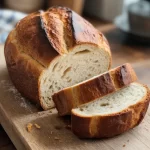
I made Rustic Olive Bread that shatters into chewy ribbons with briny olive pockets and a crackly crust that practically begs you to keep scrolling.

I can’t get over how obsessed I am with Rustic Olive Bread. I love the punch of salty mixed pitted olives and the slick shine from extra virgin olive oil, and the crumb that grabs flavor with every chew.
It feels honest, not froufrou. I eat it straight, or piled high in Gourmet Sandwiches when I need something with attitude.
But mostly I just want a thick slice, a crunchy crust, messy crumbs, and olives dotting every bite. Simple, assertive loaf that makes ordinary lunches interesting.
I keep thinking about the next time I’ll tear into one right now, honestly.
Ingredients

- Bread flour: gives the dough structure and a chewy, satisfying crumb you’ll love.
- Lukewarm water: wakes the yeast and keeps dough soft, not scary hot.
- Active dry yeast: makes it rise and airy, basically magic in a pouch.
- Fine sea salt: controls fermentation and adds that essential savory punch.
- Granulated sugar or honey: feeds the yeast and adds a touch of sweetness.
- Extra virgin olive oil: adds richness and keeps the crumb tender, plus flavor.
- Mixed pitted olives: salty, briny pockets that give big character and texture.
- Fresh rosemary: bright, herby hits that cut through the olive saltiness.
- Lemon zest: optional but really nice, brings a fresh, citrusy brightness.
- Semolina or cornmeal: keeps the loaf from sticking and adds a little crunch.
Ingredient Quantities
- 500 g (4 cups) bread flour, plus extra for dusting
- 325 ml (1 1/3 cups) lukewarm water
- 7 g (2 1/4 tsp) active dry yeast
- 10 g (1 1/2 tsp) fine sea salt
- 1 tsp granulated sugar or honey
- 30 ml (2 tbsp) extra virgin olive oil, plus extra for brushing
- 200 g (about 1 1/4 cups) mixed pitted olives, roughly chopped (Kalamata and green is nice)
- 1 tbsp fresh rosemary, finely chopped, or 1 tsp dried rosemary
- Zest of 1 lemon, finely grated (optional but really nice)
- Semolina or fine cornmeal for dusting the baking surface
How to Make this
1. In a large bowl stir together 500 g (4 cups) bread flour and 10 g (1 1/2 tsp) fine sea salt, keep the salt to one side of the bowl so it doesn’t hit the yeast right away.
2. In a measuring cup mix 325 ml (1 1/3 cups) lukewarm water, 7 g (2 1/4 tsp) active dry yeast and 1 tsp granulated sugar or honey; let sit 5 to 10 minutes until foamy. If it never foams your yeast might be dead, try again.
3. Make a well in the flour, pour the yeast mixture plus 30 ml (2 tbsp) extra virgin olive oil into the center, stir with a wooden spoon until a shaggy dough forms.
4. Turn the dough onto a lightly floured surface and knead about 8 to 10 minutes until smooth and elastic. If it feels too sticky dust a little flour, if too dry add a few drops of water, but don’t overdo it.
5. Flatten the dough gently and sprinkle 200 g chopped mixed pitted olives, 1 tbsp finely chopped fresh rosemary (or 1 tsp dried) and the zest of 1 lemon over it; fold and knead briefly until the olives and herbs are evenly distributed but some chunks remain intact.
6. Lightly oil a clean bowl with olive oil, place the dough in it, cover with plastic wrap or a damp towel and let rise in a warm spot until doubled, about 1 to 1 1/2 hours.
7. Punch the dough down, shape into a round or oval loaf, place on a baking peel or baking sheet dusted with semolina or fine cornmeal so it won’t stick, cover and proof 30 to 45 minutes until puffy.
8. Preheat your oven to 230°C (450°F) with a baking stone or an inverted sheet on the middle rack and a metal tray on the bottom rack; just before baking pour a cup of hot water into the bottom tray to create steam, or spray the oven quickly with water right after you put the bread in.
9. Just before baking brush the loaf lightly with olive oil and score the top with a sharp knife. Slide onto the hot stone or bake sheet and bake 25 to 35 minutes until deep golden brown and the loaf sounds hollow when tapped on the bottom.
10. Cool on a wire rack at least 30 minutes before slicing so the crumb sets, brush again with a little olive oil if you want extra shine, then tear into it while warm with a glass of wine or olive oil for dipping.
Equipment Needed
1. Large mixing bowl
2. Measuring jug or cup for liquids and yeast proofing
3. Wooden spoon or sturdy spatula for stirring
4. Kitchen scale and measuring spoons for accuracy
5. Bench scraper or dough scraper for folding and transferring dough
6. Baking stone or inverted baking sheet plus a baking peel or rimmed sheet dusted with semolina
7. Sharp knife or lame for scoring and a pastry brush for oiling the loaf
8. Wire cooling rack and oven-safe tray for adding hot water to create steam
FAQ
Homemade Mediterranean Olive Bread Recipe Substitutions and Variations
- Bread flour: swap with all-purpose plus 1 to 2 tbsp vital wheat gluten if you want the same chew, or use 50/50 whole wheat and all-purpose for nuttier flavor (dough will be denser, so add a splash more water).
- Active dry yeast: you can use instant yeast at about 75% of the weight (so around 5 to 6 g), or use 150 to 200 g active sourdough starter and skip commercial yeast entirely (adjust rising times).
- Extra virgin olive oil: replace with melted butter for a richer taste, or use avocado oil for a neutral, high-heat option; both keep the dough tender.
- Mixed olives: if you dont have olives try chopped sun-dried tomatoes packed in oil, or roasted red peppers for color and tang; capers also work if you want a briny punch.
Pro Tips
1) Test the yeast first, not after it’s in the dough. If the water-yeast-sugar mix doesn’t get foamy in 5 to 10 minutes toss it and try new yeast. Working with dead yeast wastes time, flour and makes you sad.
2) When you fold olives in, keep some big chunks and avoid mashing them. Too small and they bleed oil everywhere making soggy pockets, too big and they can make tearing holes, so aim for uneven chunks and knead gently.
3) Create steam in the oven for the first 10 minutes, it gives a better crust and oven spring. If you dont have a stone, use an inverted sheet and a hot pan on the bottom with water. Just be careful, the water makes a lot of steam fast so stand back when you pour it.
4) Let the loaf cool most of the way before slicing. Cutting too soon makes the crumb gummy and squashes the texture. If you want shine, brush a little olive oil after it cools, not before, otherwise the crust won’t get as crisp.

Homemade Mediterranean Olive Bread Recipe
I made Rustic Olive Bread that shatters into chewy ribbons with briny olive pockets and a crackly crust that practically begs you to keep scrolling.
8
servings
292
kcal
Equipment: 1. Large mixing bowl
2. Measuring jug or cup for liquids and yeast proofing
3. Wooden spoon or sturdy spatula for stirring
4. Kitchen scale and measuring spoons for accuracy
5. Bench scraper or dough scraper for folding and transferring dough
6. Baking stone or inverted baking sheet plus a baking peel or rimmed sheet dusted with semolina
7. Sharp knife or lame for scoring and a pastry brush for oiling the loaf
8. Wire cooling rack and oven-safe tray for adding hot water to create steam
Ingredients
-
500 g (4 cups) bread flour, plus extra for dusting
-
325 ml (1 1/3 cups) lukewarm water
-
7 g (2 1/4 tsp) active dry yeast
-
10 g (1 1/2 tsp) fine sea salt
-
1 tsp granulated sugar or honey
-
30 ml (2 tbsp) extra virgin olive oil, plus extra for brushing
-
200 g (about 1 1/4 cups) mixed pitted olives, roughly chopped (Kalamata and green is nice)
-
1 tbsp fresh rosemary, finely chopped, or 1 tsp dried rosemary
-
Zest of 1 lemon, finely grated (optional but really nice)
-
Semolina or fine cornmeal for dusting the baking surface
Directions
- In a large bowl stir together 500 g (4 cups) bread flour and 10 g (1 1/2 tsp) fine sea salt, keep the salt to one side of the bowl so it doesn't hit the yeast right away.
- In a measuring cup mix 325 ml (1 1/3 cups) lukewarm water, 7 g (2 1/4 tsp) active dry yeast and 1 tsp granulated sugar or honey; let sit 5 to 10 minutes until foamy. If it never foams your yeast might be dead, try again.
- Make a well in the flour, pour the yeast mixture plus 30 ml (2 tbsp) extra virgin olive oil into the center, stir with a wooden spoon until a shaggy dough forms.
- Turn the dough onto a lightly floured surface and knead about 8 to 10 minutes until smooth and elastic. If it feels too sticky dust a little flour, if too dry add a few drops of water, but don't overdo it.
- Flatten the dough gently and sprinkle 200 g chopped mixed pitted olives, 1 tbsp finely chopped fresh rosemary (or 1 tsp dried) and the zest of 1 lemon over it; fold and knead briefly until the olives and herbs are evenly distributed but some chunks remain intact.
- Lightly oil a clean bowl with olive oil, place the dough in it, cover with plastic wrap or a damp towel and let rise in a warm spot until doubled, about 1 to 1 1/2 hours.
- Punch the dough down, shape into a round or oval loaf, place on a baking peel or baking sheet dusted with semolina or fine cornmeal so it won't stick, cover and proof 30 to 45 minutes until puffy.
- Preheat your oven to 230°C (450°F) with a baking stone or an inverted sheet on the middle rack and a metal tray on the bottom rack; just before baking pour a cup of hot water into the bottom tray to create steam, or spray the oven quickly with water right after you put the bread in.
- Just before baking brush the loaf lightly with olive oil and score the top with a sharp knife. Slide onto the hot stone or bake sheet and bake 25 to 35 minutes until deep golden brown and the loaf sounds hollow when tapped on the bottom.
- Cool on a wire rack at least 30 minutes before slicing so the crumb sets, brush again with a little olive oil if you want extra shine, then tear into it while warm with a glass of wine or olive oil for dipping.
Notes
- Below you’ll find my best estimate of this recipe’s nutrition facts. Treat the numbers as a guide rather than a rule—great food should nourish both body and spirit. Figures are approximate, and the website owner assumes no liability for any inaccuracies in this recipe.
Nutrition Facts
- Serving Size: 134g
- Total number of serves: 8
- Calories: 292kcal
- Fat: 7.19g
- Saturated Fat: 1.15g
- Trans Fat: 0g
- Polyunsaturated: 0.5g
- Monounsaturated: 5.54g
- Cholesterol: 0mg
- Sodium: 879mg
- Potassium: 115mg
- Carbohydrates: 49.5g
- Fiber: 2.95g
- Sugar: 0.63g
- Protein: 6.5g
- Vitamin A: 0IU
- Vitamin C: 0.6mg
- Calcium: 22mg
- Iron: 0.9mg